
山东股权激励想不流于形式?业绩考核就得这么定!
发布时间:2025-10-31 发布人:山东股章浏览次数:774次 来源:www.guquanzhanlue.com
先抓底层:业绩考核的3个核心原则定考核前,得先明确3个底层逻辑,不然设计再复杂也会跑偏。
Focus on the bottom layer first: Before determining the three core principles of performance evaluation, it is necessary to clarify the three underlying logics, otherwise even the most complex design will deviate.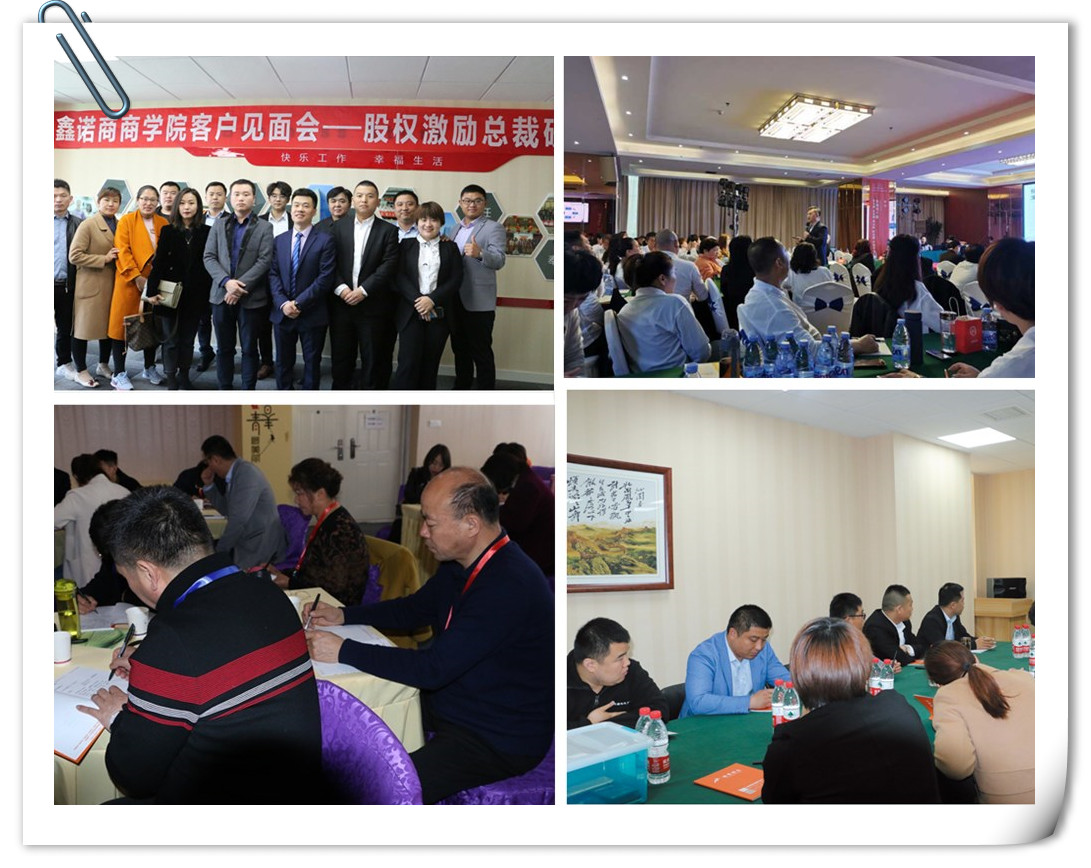
1.增量原则:别分“现有蛋糕”,要一起“做大蛋糕”股权激励不是“分存量”,而是“赚增量”——公司要通过激励让业绩增长,员工再从增长的部分里分收益,这才是“共建共享”的本质。就像华为在《以奋斗者为本》里说的:“人力资源管理的核心是让员工为企业创造价值”。华为的股权激励,始终围绕“增量业绩”设计:只有公司营收、利润实现增长,员工才能拿到对应的股权收益,既保证了股东利益,也让员工有奔头。对企业来说,要记住两点:
1. Incremental principle: Don't divide the "existing cake", let's "make the cake bigger" together. Equity incentives are not about "dividing stock", but about "earning incremental gains" - companies should use incentives to increase performance, and employees can then share the benefits from the increased portion. This is the essence of "co construction and sharing". As Huawei stated in "Striver oriented": "The core of human resource management is to enable employees to create value for the enterprise. Huawei's equity incentives have always been designed around "incremental performance": only when the company's revenue and profits grow can employees receive corresponding equity benefits, which not only ensures shareholder interests but also gives employees a sense of direction. For enterprises, two points should be remembered:
(1)对公司:考核目标得基于“现有业绩”定增长,比如“2025年净利润较2024年增长15%”,而不是“维持今年业绩就行”;
(1) For the company: The assessment target should be based on "existing performance" to determine growth, such as "net profit in 2025 will increase by 15% compared to 2024", rather than "maintaining this year's performance";
(2)对员工:股权收益是“工资、绩效之外的额外奖励”,不能替代原有薪酬,避免员工觉得“是拿股权换了降薪”。
(2) For employees: Equity benefits are "additional rewards beyond salary and performance" and cannot replace existing compensation to avoid employees feeling that they are "exchanging equity for a salary reduction".
2.确定性原则:目标要“看得见、摸得着”很多企业的考核目标模糊,比如“提升团队业绩”“做好客户服务”,员工不知道该往哪努力,HR执行时也容易扯皮。
2. Principle of Certainty: Goals should be "visible and tangible". Many companies have vague assessment goals, such as "improving team performance" and "doing a good job in customer service". Employees do not know where to put in effort, and HR can easily argue during execution.
3.差异性原则:别“一刀切”,要“因人而异”一家公司里,研发岗和销售岗、子公司和总公司、新员工和老员工,考核标准肯定不能一样。强行“一刀切”,只会让优秀员工觉得不公平,躺平员工“搭便车”。具体要分3类差异:
3. Principle of differentiation: Do not apply a one size fits all approach. It is important to consider individual differences. In a company, the assessment standards for R&D and sales positions, subsidiaries and headquarters, new and old employees cannot be the same. Forcing a one size fits all approach will only make outstanding employees feel unfair and give them a free ride. Specifically, there are three types of differences:
(1)行业/部门差异:比如互联网公司考核“用户增长”,制造公司考核“产能达标率”;销售部看“营收”,财务部看“成本控制”;
(1) Industry/department differences: for example, Internet companies assess "user growth", and manufacturing companies assess "capacity compliance rate"; The sales department focuses on "revenue", while the finance department focuses on "cost control";
(2)岗位差异:同部门里,经理要考核“团队业绩”,普通员工考核“个人任务完成率”——权力越大、拿的股权越多,责任(考核目标)也该越重;
(2) Job differences: Within the same department, managers need to assess "team performance", while ordinary employees need to assess "individual task completion rate" - the greater the power and equity, the heavier the responsibility (assessment target) should also be;
(3)时间差异:激励周期通常3-5年,每年的目标要“逐年递增”。比如第一年净利润增长15%,第二年20%,第三年25%,符合“增量思维”,也避免员工前两年躺平、最后一年慌神。
(3) Time difference: The incentive cycle is usually 3-5 years, and the goals should increase year by year. For example, a 15% increase in net profit in the first year, 20% in the second year, and 25% in the third year is in line with the "incremental thinking" and avoids employees lying flat in the first two years and panicking in the last year.
再拆关键:业绩考核的“四步走”
Key to dismantling again: the "four steps" of performance evaluation
原则理清后,具体落地要抓4个关键环节。1.第一步:明确考核前提——什么时候考核才有效?不是所有情况都需要考核:如果公司本身出了问题(比如财报被审计否定),或者员工丧失了激励资格(比如违法违纪),再考核也没意义。上市公司和非上市公司的“考核前提”差别很大,要注意区分:
After clarifying the principles, specific implementation should focus on four key aspects. Step 1: Clarify the assessment criteria - when will the assessment be effective? Not all situations require assessment: if the company itself has problems (such as financial reports being audited and rejected), or if employees lose their incentive qualifications (such as violating laws and regulations), further assessment is meaningless. There is a significant difference in the "assessment criteria" between listed and non listed companies, and attention should be paid to distinguishing them:
上市公司:1.最近1年财报无否定/无法表示意见的审计报告 2.最近1年内控报告无否定1无法表示意见 3上市后 36 个月内无未按规定分红情形 4.激励对
Listed companies: 1. Audit report with no negative/disclaimer of opinion in the financial report of the past year 2. Internal control report with no negative/disclaimer of opinion in the past year 3. No failure to distribute dividends as required within 36 months after listing 4. Incentive incentives
象无违法违规、被列“不适当人选”等情况
There are no violations of laws or regulations, or being listed as an "inappropriate candidate"
依据/说明:《上市公司股权激励管理办法》第七条、第八条
Basis/Explanation: Articles 7 and 8 of the Management Measures for Equity Incentives of Listed Companies
非上市公司:无强制要求,可自行约
Non listed companies: No mandatory requirements, can arrange on their own
定:1.公司未陷入重大经营危机 2.激励对象未违反竞业限制、劳动合同3.未出现重大违法违规事件
Decision: 1. The company has not fallen into a major business crisis. 2. The incentive recipients have not violated non compete restrictions or labor contracts. 3. No major illegal or irregular events have occurred
依据/说明:根据企业实际情况在方案中明确
Basis/Explanation: Clearly state in the plan based on the actual situation of the enterprise
2.第二步:选对考核指标——什么才能反映真实价值?指标选得好,考核才有用。常见的指标分3类,企业可以根据自身情况组合。
Step 2: Choose the right assessment indicators - what can reflect the true value? Good selection of indicators is the key to effective assessment. Common indicators are divided into three categories, and companies can combine them according to their own situation.
(1)公司层面:看“整体实力”主要是财务指标,反映公司整体业绩增长,比如:1)净资产收益率(ROE):衡量公司“用股东钱赚钱的能力”,ROE越高,股东回报越好;2)净利润增长率:最直观的“业绩增长指标”,比如“2025年净利润较2024年增长20%”;3)主营业务收入增长率:判断公司核心业务的“成长性”,比如收入增长率超10%,说明产品还在成长期;4)经济增加值(EVA):扣除所有资本成本后的利润,比净利润更能反映“真实盈利”,避免公司“虚赚利润”。
(1) At the company level, looking at "overall strength" mainly refers to financial indicators that reflect the overall performance growth of the company, such as: 1) Return on Equity (ROE): measures the company's ability to "make money with shareholder money", the higher the ROE, the better the shareholder return; 2) Net profit growth rate: the most intuitive "performance growth indicator", such as "net profit in 2025 will increase by 20% compared to 2024"; 3) Main business revenue growth rate: Determine the "growth potential" of the company's core business, for example, if the revenue growth rate exceeds 10%, it indicates that the product is still in the growth stage; 4) Economic Value Added (EVA): After deducting all capital costs, the profit reflects "real profit" more accurately than net profit, avoiding companies from making "false profits".
(2)个人层面:看“个体贡献”不能只看公司业绩,还要看员工个人的表现,分“软指标”和“硬指标”:1)软指标:价值观(是否认同公司文化)、团队协作、敬业度等(虽然难量化,但要公平评价,比如用“上级+同事”打分);2)硬指标:研发岗看“专利数量、项目交付进度”,销售岗看“营收、客户留存率”,客服岗看“投诉率、满意度”。
(2) At the individual level, when looking at "individual contributions", it is not only about company performance, but also about the individual performance of employees, divided into "soft indicators" and "hard indicators": 1) Soft indicators: values (whether they agree with the company culture), teamwork, dedication, etc. (although difficult to quantify, fair evaluation is necessary, such as using "superiors+colleagues" scoring); 2) Hard indicators: R&D positions focus on "patent quantity and project delivery progress", sales positions focus on "revenue and customer retention rate", and customer service positions focus on "complaint rate and satisfaction".
(3)特殊目标:看“关键突破”有些公司会把“里程碑事件”设为指标,比如:1)IPO:某互联网公司约定“3年内成功上市,激励对象可全额行权”;2)融资:某影视公司要求“2025年完成B轮融资3亿元”;3)用户增长:某短视频公司考核“2025年App日活用户达1500万”。
(3) Special objectives: see "key breakthrough". Some companies will set "milestone events" as indicators, such as: 1) IPO: an Internet company has agreed that "the incentive objects can fully exercise their rights if they are successfully listed within three years"; 2) Financing: A certain film and television company requires to complete a Series B financing of 300 million yuan by 2025; 3) User growth: A short video company has assessed that the daily active users of its app will reach 15 million by 2025.
3.第三步:定好考核标准——达到什么程度才算合格?指标选好了,还要明确“达标线”,比如“净利润增长率≥20%”,这里的“20%”就是标准。定标准要注意3点:
Step 3: Establish assessment criteria - to what extent is it considered qualified? After selecting the indicators, it is also necessary to clarify the "target line", such as "net profit growth rate ≥ 20%", where "20%" is the standard. There are three points to note when setting standards:
(1)必须设“下限”:避免“躺赢”下限是“合格线”,没达到就不能行权/解锁。比如某公司规定“净利润增长率低于15%,所有激励对象当年不得行权”。下限不能太松(不然激励没意义),也不能太紧(会打击员工积极性),要“跳一跳够得着”—可以参考行业平均水平、公司历史业绩,比如“比去年增长15%,比行业平均高5%”。
(1) A "lower limit" must be set: to avoid "lying down and winning", the lower limit is the "qualified line", and if it is not reached, it cannot be exercised/unlocked. For example, a certain company stipulates that "if the net profit growth rate is less than 15%, all incentive recipients are not allowed to exercise their rights in the current year". The lower limit should not be too loose (otherwise incentives are meaningless), nor too tight (which will dampen employee motivation). It should be "within reach" - you can refer to the industry average level and the company's historical performance, such as "15% growth compared to last year, 5% higher than the industry average".
(2)酌情设“上限”:避免“意外收益”上限是“封顶线”,比如“净利润增长率超50%,超额部分不额外增加股权收益”。为什么要设上限?举个例子:2019年非洲猪瘟导致猪肉价格暴涨,某养猪企业业绩大增,但这不是员工努力的结果,而是外部环境导致的。如果没设上限,员工会“躺赢”拿高额收益,对其他岗位不公平,也会让公司成本失控。
(2) Discretionary setting of "upper limit": To avoid "unexpected returns", the upper limit is the "ceiling line", such as "if the net profit growth rate exceeds 50%, no additional equity returns will be added to the excess portion". Why set an upper limit? For example, in 2019, African swine fever caused a sharp rise in pork prices, leading to a significant increase in the performance of a pig farming company. However, this was not the result of the efforts of employees, but rather the external environment. If there is no upper limit, employees will "lie down and win" with high profits, which is unfair to other positions and will also cause the company's costs to spiral out of control.
(3)逐年递增:符合“长期激励”激励周期3-5年的,每年的标准要“稳步上升”。比如某公司的净利润增长率要求:2024年15%、2025年20%、2026年25%,既让员工有持续动力,也符合公司“逐年发展”的规律。
(3) Year by year increase: For those who meet the "long-term incentive" incentive cycle of 3-5 years, the standard should "steadily increase" each year. For example, a company's net profit growth rate requirement is 15% in 2024, 20% in 2025, and 25% in 2026, which not only provides employees with sustained motivation but also conforms to the company's "year by year development" pattern.
4.第三步:选对评价方法——怎么考才公平?常用的评价方法有5种,各有优缺点,企业可以根据岗位选:
Step 3: Choose the right evaluation method - how to test fairly? There are 5 commonly used evaluation methods, each with its own advantages and disadvantages. Enterprises can choose according to their positions:
别忘落地:考核结果怎么用?设计好考核不是终点,关键是把结果和“股权权益”挂钩,让员工看到“做得好有奖励,做得差有后果”。
Don't forget to implement: How to use the assessment results? Designing a good assessment is not the end point, the key is to link the results with "equity", so that employees can see that "there are rewards for doing well, and consequences for doing poorly".
1.行权/解除限售:能不能拿股权,看考核这是最直接的用途:只有考核达标,员工才能行权(期权)或解锁(限制性股票),达标程度不同,能拿的比例也不同。比如某公司规定:
1. Exercise/Release of Restrictions: Whether an employee can acquire equity depends on the assessment. This is the most direct purpose: only when the assessment meets the standards, can the employee exercise (options) or unlock (restricted stocks). The proportion of equity that can be acquired varies depending on the degree of compliance. For example, a certain company stipulates that:
(1)个人考核“优秀”:100%行权;
(1) Personal assessment 'excellent': 100% exercise of rights;
(2)考核“合格”:80%行权;
(2) Assessment 'qualified': 80% exercise rights;
(3)考核“不合格”:0行权,股权由公司注销。2.股份调整:能不能多拿/少拿,看考核考核结果还能决定“后续股权分配”,做到“能上能下”:
(3) Assessment 'unqualified': 0 exercise, equity will be cancelled by the company. 2. Stock adjustment: Can you take more/less? The assessment results can also determine the "subsequent equity distribution", achieving "upward and downward mobility":
(1)增配股权:考核优秀的员工,下次激励可多授股权,比如某公司把“连续2年考核优秀”的员工纳入“核心激励名单”,授股额度提高50%;
(1) Additional equity allocation: For employees who have been assessed as excellent, additional equity can be granted for the next incentive. For example, a company may include employees who have been assessed as excellent for two consecutive years in the "core incentive list" and increase the equity allocation by 50%;
(2)减持股权:考核不达标的,下次授股额度降低,甚至取消资格;
(2) Reduce equity holdings: those who fail to meet the assessment standards will have their next share grant reduced or even disqualified;
(3)注销资格:如果员工不仅考核差,还违法违纪(比如泄露商业秘密),直接注销其所有未行权股权,彻底剔除。
(3) Disqualification: If an employee not only fails the assessment but also violates laws and regulations (such as leaking trade secrets), all unexercised equity will be directly cancelled and completely eliminated.
实战参考:3类典型企业的考核设计看几个上市公司的真实案例,帮你更直观理解怎么落地。案例1:华夏幸福(简洁型考核)——适合有完善内部制度的企业2018年华夏幸福的股权激励计划,考核设计特别“清爽”:
Practical reference: Examining the assessment design of three typical types of enterprises through real cases of several listed companies to help you better understand how to implement it. Case 1: Huaxia Happiness (Simplified Assessment) - Suitable for enterprises with sound internal systems. The equity incentive plan of Huaxia Happiness in 2018 has a particularly "refreshing" assessment design:
(1)公司层面:只看“净利润增长率”,2018-2020年每年达标(如2018年较基期增长≥20%)才能行权;
(1) At the company level, only the "net profit growth rate" is considered, and the exercise can only be made if the target is met annually from 2018 to 2020 (such as an increase of ≥ 20% compared to the base period in 2018);
(2)个人层面:用公司内部评价制度,分“优秀/合格/基本合格/不合格”,前三者都能100%行权;
(2) At the individual level: using the company's internal evaluation system, it is divided into "excellent/qualified/basically qualified/unqualified", and the first three can all exercise 100% of the authority;
(3)亮点:不用额外设计复杂考核,HR执行效率高,适合已有成熟内部考核体系的企业。案例2:金杯电工(复合型考核)——适合需要精准衡量的企业金杯电工2019年的计划,考核更细致:(1)公司层面:同时考“净利润增长率”和“经营活动现金流净额”(避免“虚赚利润”);
(3) Highlight: No need to design additional complex assessments, high HR execution efficiency, suitable for enterprises with mature internal assessment systems. Case 2: Jinbei Electrician (Composite Assessment) - Suitable for enterprises that require precise measurement of Jinbei Electrician's 2019 plan, the assessment is more detailed: (1) At the company level, both "net profit growth rate" and "net cash flow from operating activities" are considered (to avoid "false profits");
(2)个人层面:专门制定《股权激励考核管理办法》,分A-E五档,对应不同解锁比例(A档100%,E档0);
(2) At the individual level, a specialized "Management Measures for Equity Incentive Assessment" has been formulated, divided into five levels A-E, corresponding to different unlocking ratios (100% for level A and 0 for level E);
(3)亮点:多指标结合,能更精准衡量“公司盈利质量”和“个人贡献”,适合对业绩要求高的制造企业。最后提醒:不同企业怎么定考核?
(3) Highlight: Combining multiple indicators can more accurately measure the "quality of company profits" and "personal contributions", suitable for manufacturing enterprises with high performance requirements. Finally, a reminder: How do different companies determine their assessments?
(一)上市公司:严格对标《上市公司股权激励管理办法》,考核指标要披露“科学性”(比如用3家以上同行业对标企业),避免被监管问询;
(1) Listed companies: Strictly benchmark against the "Management Measures for Equity Incentives of Listed Companies", and disclose the "scientificity" of assessment indicators (such as using three or more peer companies in the same industry) to avoid regulatory inquiries;
(二)非上市公司:灵活但不“放水”——科技公司可加“专利数量、用户增长”,制造公司加“产能、良品率”,初创公司可把“产品上线、客户签约”设为指标;
(2) Non listed companies: flexible but not "watered down" - technology companies can add "patent quantity and user growth", manufacturing companies can add "production capacity and yield rate", and start-up companies can set "product launch and customer signing" as indicators;
(三)通用原则:1.别贪多:指标选3-5个就行,太多会增加HR工作量,也让员工抓不住重点;2.别脱节:考核要和公司战略绑定,比如想拓展新业务,就把“新业务营收占比”设为指标;3.别死板:每年可根据行业变化微调标准,比如行业下行时,适当降低增长要求,避免打击员工士气。总之,股权激励的考核不是“走过场”,而是“定方向、定规则”的核心。只有让“做得好的多拿、做得差的少拿”,才能真正绑定员工与公司的利益,让激励不流于形式。
(3) General principle: 1. Don't be greedy for too many: choose 3-5 indicators, too many will increase the workload of HR and make it difficult for employees to grasp the key points; 2. Don't disconnect: The assessment should be linked to the company's strategy, for example, if you want to expand new business, set the "proportion of new business revenue" as the indicator; 3. Don't be rigid: Adjust the standards according to industry changes every year, such as lowering growth requirements appropriately when the industry is declining, to avoid dampening employee morale. In short, the assessment of equity incentives is not just a formality, but the core of setting direction and rules. Only by allowing those who do well to take more and those who do poorly to take less can we truly bind the interests of employees and the company, and prevent incentives from becoming mere formalities.
本文由 山东股权激励 友情奉献.更多有关的知识请点击 http://www.guquanzhanlue.com/ 真诚的态度.为您提供为全面的服务.更多有关的知识我们将会陆续向大家奉献.敬请期待.
This article is about Shandong Equity Incentive Friendship Dedication For more related knowledge, please click http://www.guquanzhanlue.com/ Sincere attitude To provide you with comprehensive services We will gradually contribute more relevant knowledge to everyone Coming soon.
股权知识推荐

联系方式
电话:13698613138
电话:13698613138
地址:济南市高新区新泺大街1666号齐盛广场2号楼1306-2