
山东股权设计:7个常见问题的应对方法
发布时间:2026-01-10 发布人:山东股章浏览次数:524次 来源:www.guquanzhanlue.com
股权激励最怕的,不是“分钱”,而是“分错”。
The biggest fear of equity incentives is not "splitting money", but "splitting it incorrectly".
分错了,股权就从“筹码工具”变成“内耗火种”。我们见过太多公司,明明是想用股权凝聚人心,却因规则模糊、分配不公、退出失控……最终引发激烈争执、团队分裂,甚至对簿公堂。
If the division is wrong, the equity will change from a "chip tool" to a "spark of internal friction". We have seen too many companies that try to use equity to unite people, but end up in heated disputes, team divisions, and even going to court due to vague rules, unfair distribution, and uncontrolled exits.
事实上,90%的股权激励出现困局,都源于反复出现的7个关键问题。今天,聚焦这7个“要命”的坑,给你一份能用操作指南。
In fact, 90% of the difficulties in equity incentives stem from seven key issues that repeatedly arise. Today, focusing on these 7 "deadly" pitfalls, I will give you a practical operation guide.
别再让股权是把双刃剑,搞垮了你的团队。
Don't let equity be a double-edged sword and bring down your team anymore.
01 激励目的
01 Incentive Purpose
别用“分钱”代替“打胜仗”。
Don't use 'splitting money' instead of 'winning battles'.
都知道股权激励是为了“业绩增长”,但太多老板只做了一半——他们忙着“分钱”,却忘了“为何而分”。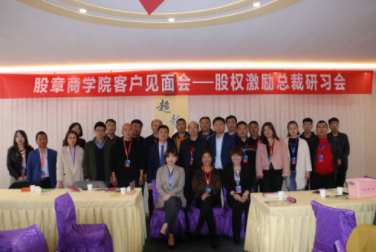
It is well known that equity incentives are aimed at "performance growth", but too many bosses only do half of it - they are busy "splitting money" and forget "why they split it".
华为激励“奋斗者”,阿里成就“合伙人”,形式虽不同,内核完全一致:每一份股权,都必须绑定清晰的战略目标。任正非反复谈钱,正因为钱是最通俗的语言。
Huawei motivates' strugglers', while Alibaba achieves' partners'. Although the forms are different, the core is completely consistent: every equity must be bound to clear strategic goals. Ren Zhengfei repeatedly talks about money precisely because it is the most common language.
误区:
Misconception:
第一个误区可能是把股权激励当作万能药,能解决所有管理问题。
The first misconception may be to treat equity incentives as a panacea that can solve all management problems.
第二个误区可能是目的过于功利化,只想着绑定员工,反而锁住了企业。
The second misconception may be that the purpose is too utilitarian, only thinking about binding employees, but actually locking in the enterprise.
第三个误区绝大多数的失败,都源于目的错位,夹杂了私心。
The third misconception is that the vast majority of failures stem from misplaced goals mixed with selfishness.
悟区:想明白你“为何而分?到底为什么做股权激励?这是根本。你必须做出战略的取舍:本次激励,主要承担哪个目标?模糊的混合目的往往导致方案失效。
Wu Qu: I want to understand why you are divided and why you are doing equity incentives. This is fundamental. You must make a strategic choice: which goal should be mainly undertaken for this incentive? Vague mixed purposes often lead to the failure of the plan.
先明确要攻下的山头是什么?再谈怎么分粮草。实现公司增长最不可或缺的人事物是谁?找到价值创造的关键岗位,找到能同频的“一路人”。寻找打胜仗的方法。
What is the hill to be conquered first? Let's talk about how to divide food and forage again. Who are the most essential people and things to achieve company growth? Find key positions for value creation and find like-minded individuals. Find ways to win battles.
激励目的不清晰,工具越精良,错得越离谱。
The motivation purpose is unclear, and the more sophisticated the tool, the more outrageous the mistake.
02 激励时机
02 Incentive timing
是选择与等待的艺术。
It is the art of choosing and waiting.
股权激励的好时机,它不是“缺什么补什么”,而是“有什么赌什么”。不是在你缺钱、缺人时应急的“强心针”,而是在你方向清晰、增长可期时,为吸引和绑定顶级人才而下注的“期权”。
The good timing for equity incentives is not about 'filling in what is missing', but about 'betting on what is needed'. It's not an emergency "shot in the arm" when you lack money or people, but an "option" bet on attracting and binding top talents when your direction is clear and growth is promising.
误区:草草分股,激励与业务脱节。
Misconception: hastily dividing stocks, incentives disconnected from business.
第一个草草分股,过早分散的股权,将成为你未来引进真人才的“天花板”。
The first hasty division of shares and premature dispersion of equity will become the "ceiling" for introducing real talents in your future.
第二个应急型激励,将股权激励当作“救火工具”,代价最高,效果最差。
The second emergency incentive, which uses equity incentives as a "firefighting tool", has the highest cost and the worst effect.
第三仅仅因为“同行都在做”、“投资人建议做”,就盲目启动激励,是最危险的走过场。激励与业务脱节,成了走过场的“仪式”,无法创造出价值。
Blindly initiating incentives just because "peers are doing it" or "investors suggest doing it" is the most dangerous way to go through the motions. Incentives are disconnected from business and have become a mere formality, unable to create value.
悟区:人,事,物都具备时。业务已跑通、团队人员经过磨合、目标清晰” 这三个锚点时,就是启动股权激励最有力、最安全的时刻。
Wu District: When people, things, and objects are all present. The most powerful and secure moment to initiate equity incentives is when the business is running smoothly, the team members have gone through a process of adjustment, and the goals are clear.
激励时机,早一步,底气不足;晚一步,人心已散。
The timing of motivation is too early, but the confidence is insufficient; One step later, people's hearts have already dispersed.
03 激励工具
03 Incentive Tools
避开“真股”陷阱,首次用好虚拟股。
Avoid the trap of "real stocks" and make good use of virtual stocks for the first time.
中小公司,常见的实股、期权,虚拟股三类,模糊使用容易出错。虚拟股权是启动股权激励最安全、最灵活的“方案”。它不涉及工商变更,不稀释实际股权,通过模拟股东分红权,让员工提前体验“做老板、分红利”的感觉。
For small and medium-sized companies, there are three common types: real stocks, options, and virtual stocks, which are prone to errors when used vaguely. Virtual equity is the safest and most flexible "plan" for initiating equity incentives. It does not involve business changes, does not dilute actual equity, and simulates shareholder dividend rights, allowing employees to experience the feeling of "being a boss and sharing dividends" in advance.
误区:过早做“实股”,陷入请神容易送神难的困局。
Misconception: Doing "real stocks" too early can lead to a dilemma where it's easy to invite the gods but difficult to give them away.
早期公司磨合未定,匆忙做工商实股,后期有人退出,复杂的程序和高昂成本,会立刻成为陷阱。这无异于一场无法回头的冒险。
In the early stages, the company's integration was uncertain, and it rushed to invest in industrial and commercial stocks. Later on, some people withdrew, and the complex procedures and high costs immediately became traps. This is no different from an irreversible adventure.
悟区:用好虚拟股,打好“信任”与“价值”两张牌。
Wu District: Make good use of virtual stocks and play the two cards of "trust" and "value".
虚拟股是“体验版”和“观察期”。通过1-3个分红周期的运行,可清晰识别出真正认同公司、持续贡献大的“事业合伙人”。
Virtual stocks are an "experience version" and an "observation period". Through the operation of 1-3 dividend cycles, it is possible to clearly identify "business partners" who truly identify with the company and make significant contributions on a continuous basis.
股权激励,是一个“先恋爱,后结婚”的过程。虚拟股,就是那段至关重要的“恋爱期”。
Equity incentives are a process of 'falling in love first, then getting married'. Virtual stocks are the crucial 'love period' during that period.
04 激励考核
04 Incentive assessment
没有考核的股权,就是“无条件福利”。
Equity without assessment is an 'unconditional benefit'.
股权激励真正的精华,不在“分”,而在“凭什么分”。没有考核的激励,本质是养懒人、造纠纷,最后变成人人有份、却无人珍惜的大锅饭。
The real essence of equity incentive is not "score", but "what score". Without assessment incentives, the essence is to nurture lazy people, create disputes, and ultimately become a big pot of food that everyone has a share in but no one cherishes.
误区:尺子不清模糊。
Misconception: The ruler is unclear and blurry.
最大的失败,往往源于“没考核”或“虚考核”。当股权变成无需努力即可获得的“入场券”,它就失去了激励的意义。模糊的“未来贡献”、空泛的“继续努力”,最终会导致信任崩塌。
The biggest failure often stems from "no assessment" or "false assessment". When equity becomes a 'ticket' that can be obtained without effort, it loses its motivational significance. Vague "future contributions" and vague "continuing to work hard" will ultimately lead to the collapse of trust.
悟区:用“增量”与“岗位”两把尺子,量出真实贡献。
Wu District: Use the two rulers of "increment" and "position" to measure the true contribution.
考核必须刚性、清晰,并紧扣两个核心原则:考核必须基于超额业绩。设定明确的利润、营收或市值增长基线,只对超出基线的“增量部分”进行激励。
Assessment must be rigid, clear, and closely adhere to two core principles: assessment must be based on excess performance. Set clear profit, revenue, or market value growth baselines, and only incentivize the "incremental portion" that exceeds the baseline.
个人考核硬指标:研发岗看“专利数量、项目交付进度”,销售岗看“营收、客户留存率”,客服岗看“投诉率、满意度”。
Personal assessment hard indicators: R&D positions focus on "patent quantity and project delivery progress", sales positions focus on "revenue and customer retention rate", and customer service positions focus on "complaint rate and satisfaction".
考核,是股权激励的“指挥棒”与“过滤网”。
Assessment is the "baton" and "filter" of equity incentives.
05 激励机制
05 Incentive mechanism
别让股权变成“死资产”,建立动态机制--进管退。
Don't let equity become a 'dead asset', establish a dynamic mechanism - advance management retreat.
大部分股权激励的失败,不是错在“开始”,而是错在“一成不变”。静态的股权分配,是一张永久的“特权门票”,导致价值贡献与利益分配的长期错位——好事最终变成坏事。
The failure of most equity incentives is not in the beginning, but in the unchanging nature. Static equity distribution is a permanent "privilege ticket" that leads to a long-term mismatch between value contribution and benefit distribution - good things eventually turn into bad things.
误区:一次分配,永久享受。
Misconception: One distribution, permanent enjoyment.
这是最致命的陷阱。当股权与当下的贡献完全脱节,会直接导致两种后果:早期的老股东躺赢,后面的新人感觉不公。激励效果归零甚至为负。
This is the most deadly trap. When the equity is completely disconnected from the current contribution, it will directly lead to two consequences: the early old shareholders will lie and win, and the newcomers behind will feel unfair. The incentive effect is zero or even negative.
悟区:建立“进入-管理-退出”全周期动态模型
Wu District: Establish a dynamic model for the entire cycle of "entry management exit"
健康的股权激励,必须像活水一样流动起来。当核心员工拿到股权后离职,股权怎么收回?运用退出机制收回。
Healthy equity incentives must flow like living water. How to retrieve equity when core employees resign after receiving it? Use an exit mechanism to retrieve.
动态进入(授予):不是“一次性赠予”,而是“分期兑现”。“不是给你多少,而是你能挣到多少”。
Dynamic entry (grant): not a one-time gift, but an installment redemption. It's not about how much you get, but how much you can earn.
动态管理(调整),建立“股份池”调节机制。
Dynamic management (adjustment), establish a "stock pool" adjustment mechanism.
动态退出(回收):必须预设清晰、公平的退出通道。无论是因为主动离职、绩效淘汰,还是退休、意外等情况,公司都应以事先约定好的价格和方式回购股权。
Dynamic exit (recycling): Clear and fair exit channels must be pre-set. Whether due to voluntary resignation, performance elimination, retirement, accidents, etc., the company should repurchase equity at a pre agreed price and method.
股权管理的本质,是建立一套“新陈代谢”系统。
The essence of equity management is to establish a "metabolic" system.
06激励核算
06 Incentive Accounting
没有透明核算,激励就是一场“猜心游戏”。
Without transparent accounting, incentives are like a guessing game.
股权激励中最伤人的,不是分得少,而是“说不清”。当分红或权益兑现变成一笔糊涂账,如何核算利润是老板很头疼的事情,公开了实际利润数据担心会泄密。
The most hurtful aspect of equity incentives is not the small share, but the inability to articulate it clearly. When dividends or equity redemption become a confusing account, how to calculate profits is a headache for the boss, and disclosing actual profit data may lead to leaks.
误区:黑箱操作,信任崩塌
Misconception: Black box operation, trust collapse
核算过程不透明,是股权激励从“好事”变“坏事”的最快路径。员工看不到数据、看不懂规则、看不到结果,只会产生一个念头:“老板在画饼,或者我的那份被动了手脚”。
The opaque accounting process is the fastest path for equity incentives to turn from a "good thing" to a "bad thing". Employees who cannot see the data, understand the rules, or see the results will only have one thought: 'The boss is drawing a cake, or my part is being manipulated.'.
悟区:采用毛利润分配。
Wu District: Adopt gross profit distribution.
对于中小企业来说,可以用模拟利润来代替,即设定一个分红比例,附加一个考核条件,并根据考核条件调整模拟利润。实际操作时,模拟利润的数据可以不需要过于精确。模拟利润=公司的营业收入-总成本-期间显性费用-其他成本。
For small and medium-sized enterprises, simulated profits can be used as a substitute, that is, setting a dividend ratio, attaching an assessment condition, and adjusting simulated profits according to the assessment condition. In practical operation, simulating profit data does not need to be overly accurate. Simulated profit=company's operating revenue - total cost - explicit expenses during the period - other costs.
股权激励的信任,建立在每一笔清晰的计算之上。
The trust of equity incentives is built on every clear calculation.
07激励税负:
07 Incentive Tax Burden:
别让员工“到手半价”,做好税务规划才是真激励。
Don't let employees get half the price, good tax planning is the real motivation.
员工最怕的,不是拿不到股权,而是“股权变现时,一半都交了税”。忽视税负的激励方案,就像一张缩水的支票——面额很大,到手很少。
The biggest fear for employees is not not not not being able to obtain equity, but rather 'paying half of the taxes when realizing equity'. An incentive plan that ignores tax burden is like a shrunken check - with a large denomination but little in hand.
误区:只管分股,不问税负,激励效果大打折扣
Misconception: Only focusing on stock distribution without considering tax burden, greatly reducing the incentive effect
很多老板设计方案时,只关注“分多少”,却忘了算“到手多少”。等到员工真要行权或变现时,才发现面临高额的个人所得税,瞬间感觉激励“打了对折”。
Many bosses only focus on "how much to divide" when designing plans, but forget to calculate "how much to get". When employees really want to exercise or monetize their rights, they realize that they are facing high personal income tax, and instantly feel that the incentive has been "halved".
悟区:将税务规划前置,用对工具、选对时点。
Wu District: Prioritize tax planning, use the right tools, and select the right timing.
专业的股权激励,必须在设计之初就将税务作为核心变量。非上市的公司:可合理通过股权架构设置规划降低税负。
Professional equity incentives must be designed with taxation as a core variable from the outset. Non listed companies can reasonably reduce their tax burden through equity structure planning.
真正的激励,是让员工清晰地看到“税后收益”。
The real motivation is to make employees clearly see their 'after tax earnings'.
股权激励,从来不是“分家产”,
Equity incentives have never been about "dividing assets",
而是设计一套共赢的规则。
But rather design a set of win-win rules.
任正非说:
Ren Zhengfei said:
在华为二十年所做的最重要的事就是分钱,把钱分好了,组织就活了。
The most important thing I have done in Huawei for 20 years is to distribute money. Once the money is distributed properly, the organization will come to life.
在做关键决策前,拿出来对照一遍——它不能保证完美,但能帮你避开最致命的错误。
Before making a critical decision, take it out and compare it - it may not guarantee perfection, but it can help you avoid the most fatal mistakes.
本文由 山东股权设计 友情奉献.更多有关的知识请点击 http://www.guquanzhanlue.com/ 真诚的态度.为您提供为全面的服务.更多有关的知识我们将会陆续向大家奉献.敬请期待.
This article is a friendly contribution from Shandong Equity Design For more related knowledge, please click http://www.guquanzhanlue.com/ Sincere attitude To provide you with comprehensive services We will gradually contribute more relevant knowledge to everyone Stay tuned
股权知识推荐

联系方式
电话:13698613138
电话:13698613138
地址:济南市高新区新泺大街1666号齐盛广场2号楼1306-2